6.28.2013

Gem of the day

What does it say about Interbrand's 50 Best Global Green Brands 2013 that four out of the top five are car manufacturers? Not surprisingly, Interbrand has specifically highlighted that question. Even less of a surprise is that their answer is misses the point.

Congratulating auto companies for "keeping the long term in focus" is rightfully said for Toyota, a business guided by a vision to achieve sustainable mobility. For other manufacturers, the real test of whether they deserve to be on any list like this one will be their approach in emerging markets where the sales are, not in slow-moving efforts to transform or adapt some product and service offerings in Europe and North America. If those companies are truly balancing long and short term goals, it will be by influencing the mobility system in countries like China - now the biggest car market in the world - not least by helping governments avoid the car-dependency culture that has trapped the USA in a cycle of obesity, air pollution, suburban malaise and punishing oil prices. Rethinking what America might do with the estimated three parking spaces per person of empty concrete space is still in very early stages.

It goes without saying that the core of the Interbrand ranking, a score based on performance and "perception", is in and of itself a non-starter. One of several "perception" elements, for example, is "authenticity", which Interbrand describes as "the perceived credibility of the brand's environmental claims". Since authenticity can only be based on real action over the long term, "perceived credibility" is hardly a useful way of measuring it. Consider how often BP ranked in the top 10 most accountable companies in the world throughout the 2000s, only to reveal the extent of its inauthentic approach to environmental management in April 2010's Deepwater Horizon disaster.

Rankings like this one are amusing, but they don't tell us much about the core challenges ahead for the auto industry and beyond.

6.26.2013

Another non-environmental wonder

Epic Pentagon Papers whisteblower Daniel Ellsberg nails how secrecy, and operating in a culture organised around the "haves" and "have nots" of classified information, turns people into "morons" (via the New Yorker):

"'You will deal with a person who doesn't have those clearances only from the point of view of what you want him to believe and what impression you want him to go away with, since you’ll have to lie carefully to him about what you know...[So] the danger is, you’ll become something like a moron. You’ll become incapable of learning from most people in the world, no matter how much experience they have in their particular areas that may be much greater than yours.'"

6.24.2013

Gem of the day

Via Nestle Waters Twitter debate, a classic case of corporate sustainability jargon raising the question, why bother even asking? Or more to the point, why should anyone in their right mind give the "reports not reporting" approach a single second of time?


6.13.2013

Another non-environmental wonder

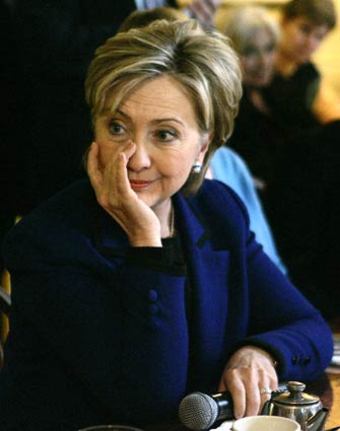
Case-in-point why Hillary Clinton didn't win the 2008 election against Obama, illustrated by one of the multiple slogans rolled out across the misguided campaign (via Jon Lovett):

"Strength + experience/change = 1"


6.12.2013

Something that's actually good

Larry Huston of P&G fame explains why for most incumbents the concept of "transformation" fails to catalyse change (via London Business School):

"I think transformation is a dirty word. If you go and say to a company, 'I'm going to go transform you', they'll say, it's going to be impossible and we'll never finish. In the case of Connect + Develop we were careful not to position it as transformation – even though now it is. We said, we have a strong, powerful, global organisation, we've built outstanding capability all over the world, we have world class people, what we're going to do is take this already strong capability and turbocharge it. And so the core idea is based upon how do we turbocharge? And then, what are the accepted beliefs that people have about this kind of thing? How do we create its credentials?"

6.11.2013

Something that's actually good

John Thackara on the mindset challenge of big data for multinationals (via Change Observer):

"A lack of data does not mean a lack of value and potential. Billions of people with low cash incomes meet their daily life needs outside the money economy — for example, through traditional networks of reciprocity and gifts...The problem with Big Data is not that numbers are bad — it’s that we’ve made them an end-in-themselves in ways that lead us to misallocate time, attention, and resources. Big Data can work well in support for online resource-sharing — AirBNB, Uber, eBay and their like — but they’re of modest efficacy to the informal economy where, to repeat, a big majority of the worlds’s citizens subsist."

What could be a more timely observation, as the giants that created the big data revolution come under scrutiny for their role in mass surveillance of Americans?

6.06.2013

Another non-environmental wonder

How Walmart has lost its way (oh let us count the ways), according to retail man Doug Stephens (via Businessweek):

“This is the lesson Costco teaches. You don’t have to be Nordstrom selling $1,200 suits in order to pay people a living wage. That is what Walmart has lost sight of. A lot of people working at Walmart go home and live below the poverty line. You expect that person to come in and develop a rapport with customers who may be spending more than that person is making in a week? You expect them to be civil and happy about that?”

6.04.2013

Gem of the day

In a potentially radical about-face, Apple has hired former EPA head Lisa Jackson to push environmental progress at the company. Great news for cleaner products with a cleaner foundation - renewables, zero waste.

But Jackson's true challenge may be moving beyond the built-in glass ceiling of her title - VP for Environmental Initiatives - to reframe sustainability as a powerful driver of innovation for the company (as Hannah Jones has done at Nike). An initial guess suggests that is unlikely to happen.

5.16.2013

Gem of the day

Case in point why The Nature Conservancy, like most corporate-funded, partnership-dependent NGOs, just doesn't get:

a) The biggest impact of their work on business, especially companies where conservation isn't most material (hint: it's reputational, the halo effect of being seen to work with a global conservation organisation)

b) The changing role of business in the world, especially in relation to government (hint: "megatrends" are called "mega" for a reason, so it's not an "either/or" of government vs. business need to take action)

But I'll let TNC President Mark Tercek speak for himself:


"You’re asking, what’s Coke going to do about its product, or how can they be an even nobler citizen? I don’t know the answer. And it’s not exactly TNC’s job. If Coke’s product is a bad product, I think the government has to say so. That’s my personal answer. I don’t think you can ask a business to not be a business."

Luckily for Tercek there are people out there who know the answer: stop targeting minorities and kids with marketing, price drinks so smaller sizes are best value (full list here), or, even better, just sell less Coke.

5.13.2013

Another non-environmental wonder

Generic insight of the day, courtesy of Deloitte (via Bloomberg):

"India is offering a great opportunity for companies to be part of the volume growth...There is continued interest and there will more international players coming into India."

5.02.2013

Gem of the day

The 2013 Sustainability Leaders survey is out from Globescan & SustainAbility, and the results aren't surprising. Unless, that is, you happen to think that Coca Cola looks painfully out of place in the top 10 next to the likes of Unilever, Natura and Nike.

First thing's first: Coke is doing a lot on water, setting huge goals like net zero water consumption in its operations that the company hardly has any idea how to achieve. But in a year where we saw the obesity epidemic finally rising to panic button levels, Coke's sports-as-medicine strategy that places the burden 100% on people to "consume responsibly" is starting to make the soft drinks industry look like the new tobacco (Franck Riboud was already saying this at Danone 7 years ago, and the company refocused its business on healthy products as a result).

Companies that deserve to be on a leadership list are those that are not only accepting responsibility for, but truly leading an effort to transform their most material impacts into net benefits for everyone. Unilever on personal resource efficiency and sanitation at scale, Natura on biodiversity and Nike on innovation driven by sustainable materials fit that description - or at least have set the kinds of long-term goals that commit them 100% to getting there.

Until Coke's board gets real about the obesity crisis and the central role of its products in fueling it - and that includes stopping its ridiculous 1990s-esque attempts to stymie any and all regulation, read it and weep - they don't belong in such company.


4.26.2013

Gem of the day

An example of how not to sum up where we are with the sustainable business agenda, especially when making the case for leadership (via HBR):

"Warren Buffett, Robert Rubin, and Howard Schultz have been outspoken about the role of business in American society, and companies from Walmart to Chevron have engaged in socially responsible activities."

4.15.2013

Another non-environmental wonder

The aftermath of CEO Ron Johnson's hasty exit from retailer JC Penney has proved a busy space for commentary on just how wrong he got it.

Apple board member Bill Campbell echoed a critical insight into why business transformation can fail with his take on the situation (via Businessweek):

“You have to keep your current business going while you experiment with a new one. [Ron] didn’t do that. He just put a bullet hole in his current business."

Even better, an interview with Johnson offers a priceless look at his misguided attitude towards the change process, in his own words (via FastCompany):

"All my ideas just sort of come. I don’t know to explain it. It’s all intuitive I think...I wanted to do something that had scale. I don’t just want to run a business, I want to do what I did at Apple--I want the chance to transform something. So I picked JC Penney. I didn’t come here to improve Penney, I’m here to transform Penney."


4.10.2013

Gem of the day

Infamous Whole Foods CEO John  Mackey is on a roll with his "Conscious Capitalism" call to action - business should lead by embedding a "higher sense of purpose" in value creation. So it's beyond ironic that his answer to an area where upscale Whole Foods has yet to fulfill that kind of leadership - increasing access to healthy food in the US, land of "food deserts" - is to...create a nonprofit (via Forbes):

Forbes: "One of the primary issues with Whole Foods is that the stores are largely located in well-to-do areas. How does Whole Foods intend to make healthy food available to all?"

Mackey: "We do take seriously our responsibility, and growing ability, to educate people about healthy eating and giving them greater access...We will start to bring healthy food options to people in several other cities, starting with a new store in mid-town Detroit that will open in May. We are even looking to create a new non-profit to help make this a reality."


4.04.2013

Gem of the day

Former BP chief Tony Hayward's take on the operating environment for oil companies in Kurdistan, where he's quietly excelling as CEO of Genel Energy as the memories of Deepwater Horizon fade away (via BBC):

"If you like, it's conventional Middle Eastern oil and gas exploration - pretty straightforward, and pretty low-cost."

In that case what passes for "conventional" in the Middle East must mean something quite different from in other parts of the world, if we believe this Kurdish observer (via Independent):

"We Kurds have one of the most complicated political situations in the world."

Or even better:

"I call it ‘Corruptistan’," said one woman.

4.02.2013

Gem of the day

Coca Cola's new "Chairs" ad (see raging critique in HuffPo) is the company's latest take on placing responsibility for health and wellbeing squarely on the consumer - where it's easiest to say it belongs. Why "Chairs"? Of course Publicis, creators of the ad, can handily explain:

"The goal was to open the discussion with the society about the sedentary lifestyle problem. Some studies show that people spend more than half of their lives seated and that was the inspiration for the idea. Since the insight is human and universal the campaign can be used in future in other countries, depending on Coke Worldwide's decision."

With half of Americans already obese and numbers rising, surely a "sedentary lifestyle" is only chipping away at a much larger systematic issue - but given Coke's focus on marketing around this issue rather than taking real action, that's probably asking too much.

3.20.2013

Gem of the day

Al Gore uses his ShareAction speech to give us something to be optimistic about in the uphill battle to making capital markets sustainable:

"Here's what we've got on our side: the way markets are operating today is functionally insane."

3.19.2013

Another non-environmental wonder

How much can you pack into a generalized statement about "Africa"? In the world of business, a lot (via BusinessWeek, of course):

“Africa is an idea, not a market," sayeth veteran IBM shareholder Richard Soultanian.

Not to be outdone, IBM's head of South African operations has this to say:

"On his desk was a newspaper article chronicling the aftermath of an August police massacre of 34 platinum miners after an illegal strike turned violent. 'My actions cannot be dictated by what is going on in the country or the marketplace,' he says."

Now that's a smart way to look at doing business in emerging markets. Get thee to the real experts before it's too late - they just might be able to help you appreciate this reality instead:

"If the local socio-political system is characterized by a lack of transparency, profound structural inequalities, deeply engrained types of social discrimination, widespread arbitrariness, omnipresent corruption or pervasive structural violence, then your actions will normally reinforce those features, even if unintentionally."

Right.

3.12.2013

Gem of the day

When someone writes an article titled "Can Even Hated Industries Redeem Themselves with Social Media?" you know what you're getting: very expensive "crisis communications" consultancy, free from any sense of irony.

Still, inevitably it's worth reading these pieces if only for outstanding gems like this one:

"Utilities have a powerful story that simply isn’t being told. They are the engine that makes every aspect of modern life possible. They are the first responders on the front lines when Mother Nature wreaks her havoc...These are the narratives that will establish tangible consumer connections and put a human face on that flick of the switch."

Then again, what more would you expect in this particular case from the man who did PR for Guantanamo, Deepwater Horizon and the Catholic Church?

3.04.2013

Bonus gem

More extraordinary statements from an extraordinary industry (financial services). Here's a very special one from a "financial services expert" at PA Consulting Group (via FT, where else?):

"The great core strength of banks is their ability to take an intelligent view of the value of an asset and its associated risk."

So that core purpose must have just slipped bankers' minds in what made 2012 a record year for massive risk fall-outs at the world's biggest banks:
Then again, maybe JP Morgan leader Jamie Dyman was acknowledging the bitter truth when he said this during his semi-apology to Congress:

“We’re doing what a bank is supposed to do."