9.30.2013

Another non-environmental wonder

Cinnabon, the American - where else? - company that manufactures the ultimate processed dessert clocking in at over 800 calories per unit, just doesn't get it. As proof here's CEO Kat Cole, who unbelievably calls herself a "connected-creative-conscious-capitalist", on why Cinnabon has done literally nothing to address the ridiculous implications of its product (via Businessweek)

"If we say the Classic Cinnamon roll is a smidge smaller, they are going to be like, 'That’s still hundreds and hundreds of calories, and it’s still huge, and it’s still dripping with margarine and frosting.'"


9.24.2013

Another non-environmental wonder

John Lanchester shines a light on the incredible extent to which banks have failed in the UK - not only as institutions, perhaps banking's higher purpose, but even as companies. His key points on why the push for cultural change - made the talk of the town by Antony Jenkins at Barclays - won't work:

  • "Our banks are so big and so complicated that it isn’t clear their cultures are amenable to change in the way we need. Joris Luyendijk, a Dutch journalist who has been running a two-year project interviewing bank staff, reached the same conclusion. His experience was that banks are fragmented and atomised places, and that in many parts of them employees regarded themselves as working not so much for the bank as against it."
  • "Let’s for a moment propose a counterfactual, in which one of the big banks was headed not by a banker but...a professional ethicist, greatly admired by his peers, who writes books about the need for banking to be a moral enterprise...The bank was HSBC, and the person in charge as CEO and then as chairman of the board was Stephen Green, who is an ordained minister in the Church of England...As for how that worked out, well, it was on his watch that Mexican drug-dealers made special boxes to deliver drug cartel money over the deposit counter."
  • "There’s no reason to think that an emphasis on ethical banking, from the head of the company down to the troops, is likely to have any effect. These banks are huge and hugely complex institutions, whose separate components are fragilely and fleetingly linked. That is the reality of ‘universal banking’"

9.23.2013

Gem of the day

Tesco's new CR strategy, designed as a rather-late-than-never response to its many detractors, names health as one of three big focus areas.

So the chain's choice of photo to illustrate this commitment in its latest report is ironic, if appropriate:


9.18.2013

Gem of the day

In the increasingly public melee over corruption in BP's claims process for Gulf of Mexico recovery funds, here's the one question that shouldn't be asked:

"Is this fair to BP?"

Even worse is the answer provided by the author, who is also Executive Director of the Texas Civil Justice League:

"BP's good faith effort to make whole the individuals and businesses harmed by the spill has morphed into a travesty of justice that threatens not only the financial future of a major U.S. employer and energy producer, but the integrity of the judicial process itself."

Then again, that wondrously distorted point of view is no surprise coming from the TCJL, which counts Koch Industries and the Texas Oil & Gas Association among its board members.


9.10.2013

Something that's actually good

Energy expert Kurt Cobb sums up the bottom line on fossil fuels:

"Advancements in technology designed to extract more oil, natural gas, coal and uranium from the ground are in a race with geological constraints."

9.09.2013

Gem of the day

Finally: Walmart is making a concerted effort to address some of the major social and economic criticisms the company has faced for decades.

Except this is not about making long overdue commitments - it's The Real Walmart campaign. Featuring a PR firewall of Q&A and supportive quotes from "real customers". Little else could sum up the reality of rampant inequality and declining mobility in the US that Walmart represents better than this customer quote:

"On two deployments in Iraq I served with a lot of guys who didn't know if they had a job waiting for them. Walmart held my job for me."

8.14.2013

Gem of the day

Businessweek continues its run of excellent pieces on BP's shift from highly visible humility post-Gulf of Mexico to aggressive litigation and denial, pointing out how the company is becoming one giant law firm.

The best example is delivered through an interview with CEO Bob Dudley, who pulls no punches with lines like this one about alleged corruption in the claims process:

"We’re a big investor in the United States, and we’ve challenged this really strongly. It’s just not right."

Anyone looking for more insight into Dudley's remarkable attitude might find grist for the mill later in the interview, when he attempts to answer the following:

[Interviewer]: "Why do people hate oil companies?"
[Dudley]: "People in oil and gas are sort of perplexed by this...I absolutely, passionately, and thoroughly enjoy oil and gas."


8.05.2013

Gem of the day

KPMG's highly scientific graph proves once and for all sustainability can deliver ROI - oh right:


Something that's actually good

Simon Zadek on the irony of systemic risk in financial markets, in a nutshell:

"Short termism delivers some specific, systemic biases in the pricing of risk. Zero carbon pricing in valuation is the exemplary case. practiced by the vast majority of investors (including many of those belonging to climate-sensitive investor coalitions). Such pricing in effect is betting on a four to six degree world, an approach that at scale is nothing less than shorting civilization itself."

7.30.2013

Another non-environmental wonder

Understanding the scale of Serco, the private government contractor running prisons, hospitals, and even nuclear facilities across the UK, is no small challenge. Here's two clues to help convey just how giant it is (via the Guardian):

  •  "Without Serco, Britain would struggle to go to war" says the Daily Telegraph
  • A prime example of the level of information Serco is willing to release publicly about its operations in the UK, bringing new meaning to the term "opaque": "We operate in a range of markets and geographies, which means we are well placed to bring a wide range of experiences and knowledge to help customers with the challenges that they face."
But nothing tops the explanation of CEO Chris Hyman as to why the company is so invisible:

"We are delighted when the public knows who we are, but really, we need to be known by the people who make decisions."

7.25.2013

Another non-environmental wonder

John Oliver (standing in for Jon Stewart on The Daily Show) on the absurdly repetitive efforts of Jay Carney, the White House Press Secretary, to avoid calling the situation in Egypt a "coup" (his only talking point: "I'm going to be blunt here, it's a highly complicated situation."):

"I don't know if Jay Carney is doing a bad job, or just has a really bad job."

7.22.2013

Something that's actually good

Since the media seems to have missed it entirely, here's welcome proof that at least one person in the convoluted land of intergovernmental policy is taking on the challenge of playing provocateur to the food industry. Thanks Director General of the WHO, Dr. Margaret Chan (via UN):

"Instead of diseases vanishing as living conditions improve, socioeconomic progress is actually creating the conditions that favour the rise of non-communicable diseases...It is not just Big Tobacco anymore. Public health must also contend with Big Food, Big Soda, and Big Alcohol."

7.17.2013

Gem of the day

BP's strange campaign to combat alleged fraud in the payouts from its $20 billion Deepwater Horizon recovery fund, ironic in more ways than one, took another twist yesterday. In a move that the WSJ correctly identified as a marked - and inevitable - shift from the company's PR-led apologetic tone in the aftermath of the Gulf spill, BP is aggressively reaching out to the mass public for help by setting up an anonymous fraud "hotline".

The company's official statement on Tuesday promoted the hotline as a resource "for people who want to do the right thing". So in that case here's someone who should probably call in: former CEO Tony Hayward. After all, when stepping down in July 2010 he assessed his role in the Deepwater Horizon disaster in exactly the following terms: "I became a villain for doing the right thing".

If he does speak up about the proportion of alleged fraud in the fund, BP had better hope Hayward's recommendation isn't based on his early approach to talking about the environmental impact of Deepwater Horizon:

"I think the environmental impact of this disaster is likely to be very, very modest...Gulf of Mexico is a big ocean."

7.05.2013

Gem of the day

Oil majors like BP might be in denial about oil running out, but they sure are quick to notice when money is running out - especially money linked to legal obligations from a spill.

In editorial adverts last month BP issued concerns over potentially illegitimate claims being paid out from its dedicated $20 billion Gulf of Mexico reparation fund. Verbatim:

"Trial lawyers and some politicians are attempting to capitalise on this misinterpretation by encouraging the submission of thousands of claims for inflated losses, or losses that do not even exist...Whatever you think about BP, we can all agree that it's wrong for anyone to take money they don't deserve."

It sure is. Which makes BP's own history of poorly managed anti-corruption policies so much more ironic, from over 365 breaches of conduct in its Russian TNK venture, to years of bribery exposed in its shipping division.

And it's not worth getting started on BP's own role in promoting things that "do not even exist" - artificial reserves, anyone?

6.28.2013

Gem of the day

What does it say about Interbrand's 50 Best Global Green Brands 2013 that four out of the top five are car manufacturers? Not surprisingly, Interbrand has specifically highlighted that question. Even less of a surprise is that their answer is misses the point.

Congratulating auto companies for "keeping the long term in focus" is rightfully said for Toyota, a business guided by a vision to achieve sustainable mobility. For other manufacturers, the real test of whether they deserve to be on any list like this one will be their approach in emerging markets where the sales are, not in slow-moving efforts to transform or adapt some product and service offerings in Europe and North America. If those companies are truly balancing long and short term goals, it will be by influencing the mobility system in countries like China - now the biggest car market in the world - not least by helping governments avoid the car-dependency culture that has trapped the USA in a cycle of obesity, air pollution, suburban malaise and punishing oil prices. Rethinking what America might do with the estimated three parking spaces per person of empty concrete space is still in very early stages.

It goes without saying that the core of the Interbrand ranking, a score based on performance and "perception", is in and of itself a non-starter. One of several "perception" elements, for example, is "authenticity", which Interbrand describes as "the perceived credibility of the brand's environmental claims". Since authenticity can only be based on real action over the long term, "perceived credibility" is hardly a useful way of measuring it. Consider how often BP ranked in the top 10 most accountable companies in the world throughout the 2000s, only to reveal the extent of its inauthentic approach to environmental management in April 2010's Deepwater Horizon disaster.

Rankings like this one are amusing, but they don't tell us much about the core challenges ahead for the auto industry and beyond.

6.26.2013

Another non-environmental wonder

Epic Pentagon Papers whisteblower Daniel Ellsberg nails how secrecy, and operating in a culture organised around the "haves" and "have nots" of classified information, turns people into "morons" (via the New Yorker):

"'You will deal with a person who doesn't have those clearances only from the point of view of what you want him to believe and what impression you want him to go away with, since you’ll have to lie carefully to him about what you know...[So] the danger is, you’ll become something like a moron. You’ll become incapable of learning from most people in the world, no matter how much experience they have in their particular areas that may be much greater than yours.'"

6.24.2013

Gem of the day

Via Nestle Waters Twitter debate, a classic case of corporate sustainability jargon raising the question, why bother even asking? Or more to the point, why should anyone in their right mind give the "reports not reporting" approach a single second of time?


6.13.2013

Another non-environmental wonder

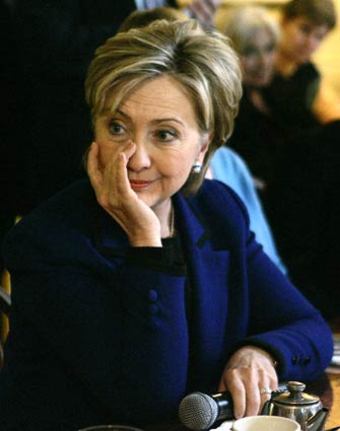
Case-in-point why Hillary Clinton didn't win the 2008 election against Obama, illustrated by one of the multiple slogans rolled out across the misguided campaign (via Jon Lovett):

"Strength + experience/change = 1"


6.12.2013

Something that's actually good

Larry Huston of P&G fame explains why for most incumbents the concept of "transformation" fails to catalyse change (via London Business School):

"I think transformation is a dirty word. If you go and say to a company, 'I'm going to go transform you', they'll say, it's going to be impossible and we'll never finish. In the case of Connect + Develop we were careful not to position it as transformation – even though now it is. We said, we have a strong, powerful, global organisation, we've built outstanding capability all over the world, we have world class people, what we're going to do is take this already strong capability and turbocharge it. And so the core idea is based upon how do we turbocharge? And then, what are the accepted beliefs that people have about this kind of thing? How do we create its credentials?"

6.11.2013

Something that's actually good

John Thackara on the mindset challenge of big data for multinationals (via Change Observer):

"A lack of data does not mean a lack of value and potential. Billions of people with low cash incomes meet their daily life needs outside the money economy — for example, through traditional networks of reciprocity and gifts...The problem with Big Data is not that numbers are bad — it’s that we’ve made them an end-in-themselves in ways that lead us to misallocate time, attention, and resources. Big Data can work well in support for online resource-sharing — AirBNB, Uber, eBay and their like — but they’re of modest efficacy to the informal economy where, to repeat, a big majority of the worlds’s citizens subsist."

What could be a more timely observation, as the giants that created the big data revolution come under scrutiny for their role in mass surveillance of Americans?